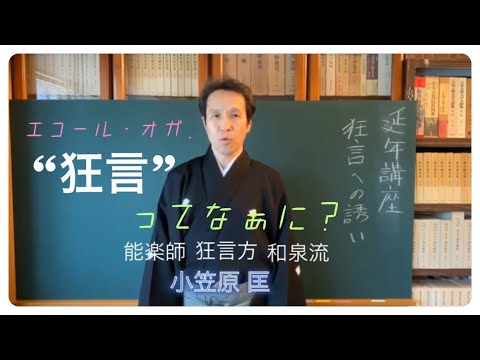
Kyogen Class: “Wakana-no-kai”
Kyogen Class (Group Lessons)
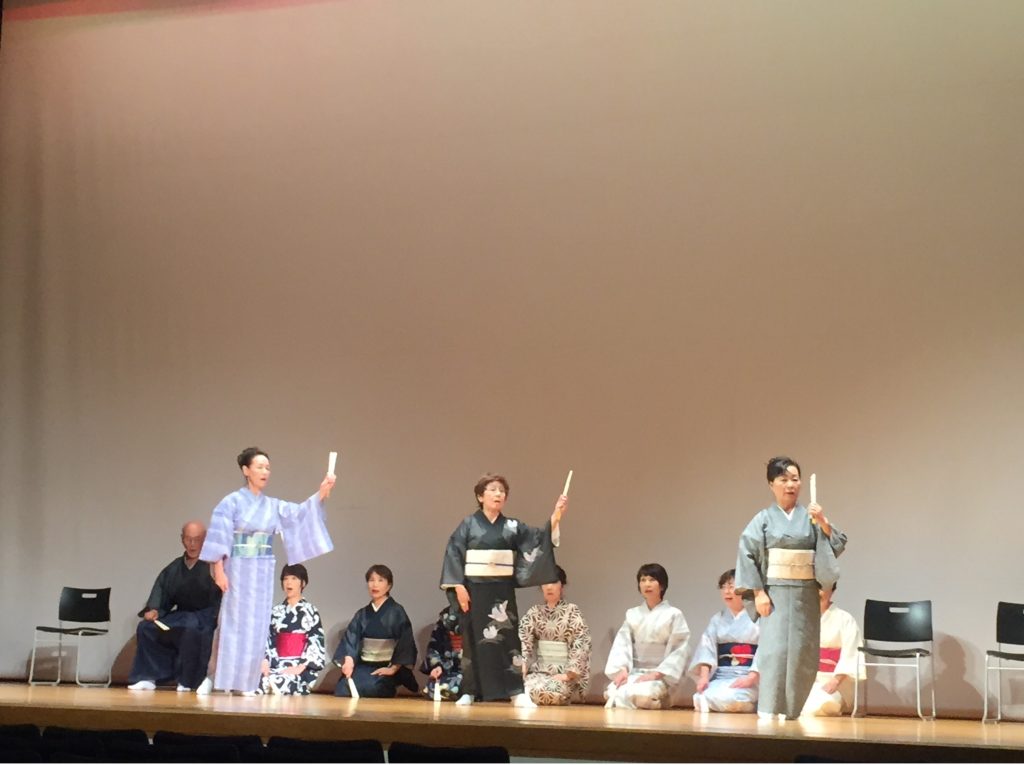
“Through Kyogen, I want to give people a cultural shock. If I can inspire even one more person to be as captivated by Kyogen as I am…” With this passion, alongside my stage performances, I am deeply dedicated to teaching and sharing this art. > I believe it is the destiny of those involved in traditional performing arts to pass down what we have inherited from our masters and what we have learned ourselves. In our group lessons, beginners will enjoy mastering gentle Utai (chanting) and Mai (dancing) over a course of 12 sessions in 3 months.
Tokyo: July 7, 13 / August 5, 28 / September 16, 28 (6 sessions total) Osaka: Applications open anytime (Class starts as soon as the minimum number of participants is reached)
Tuition: 3,000 yen per session (30 mins / twice a month / 6 sessions over 3 months) Total: 18,000 yen
“Wakana-no-kai” (Private Lessons)
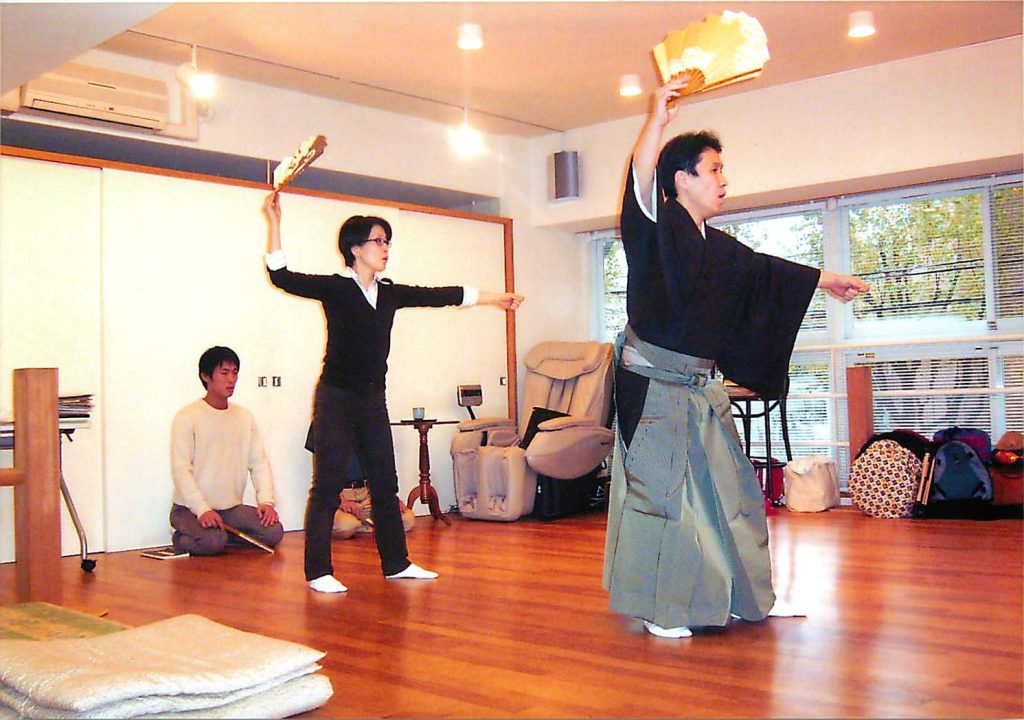
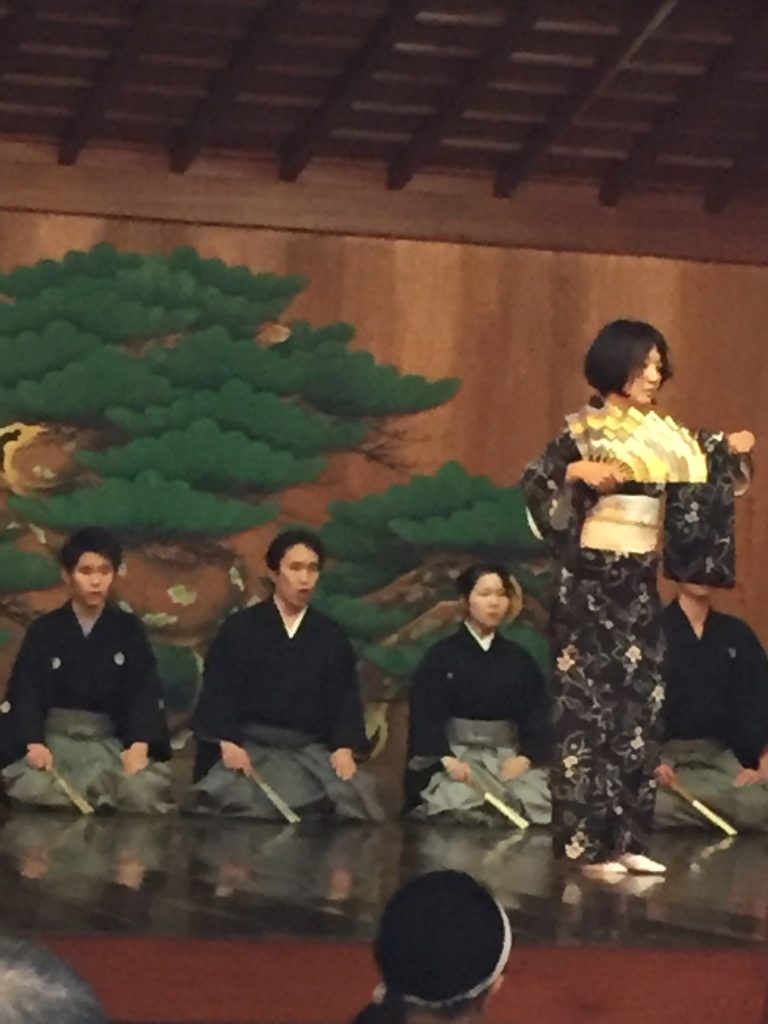
I direct the Kyogen class “Wakana-no-kai” across various locations, including Tokyo, Kyoto, Osaka, and Paris, France. Our students range widely, from those enjoying Kyogen as a hobby to disciples who have entered the professional world.
The lessons cover Koutai (short chants), Komai (short dances), Katari (narration), and full Kyogen pieces. We also regularly hold Kyogen recitals both in Japan and internationally. Lesson schedules and frequency are flexible and available upon request.
Tokyo: July 7, 13 / August 5, 28 / September 16, 28 (19:30– / 6 sessions total) Osaka: Held anytime (Schedules are flexible and available upon request)
Tuition (Tokyo): 6,000 yen per session / Total: 36,000 yen (30 mins / twice a month / 6 sessions over 3 months) Tuition (Osaka): 5,000 yen per session / Total: 30,000 yen (30 mins / twice a month / 6 sessions over 3 months)
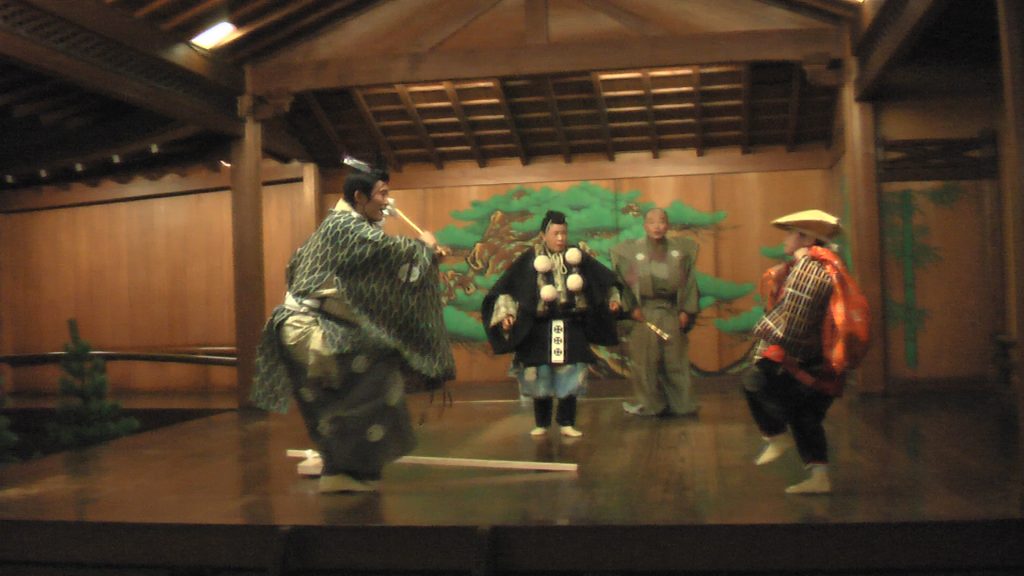
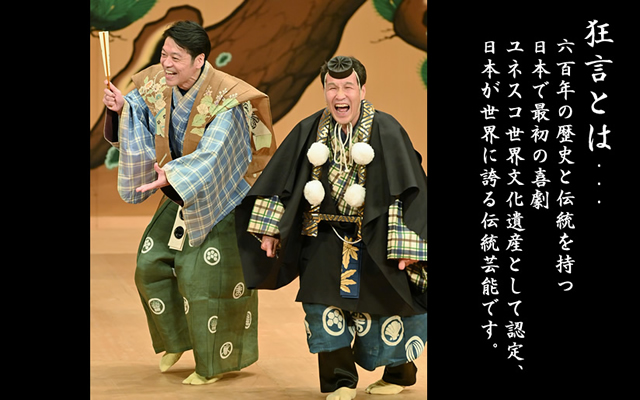
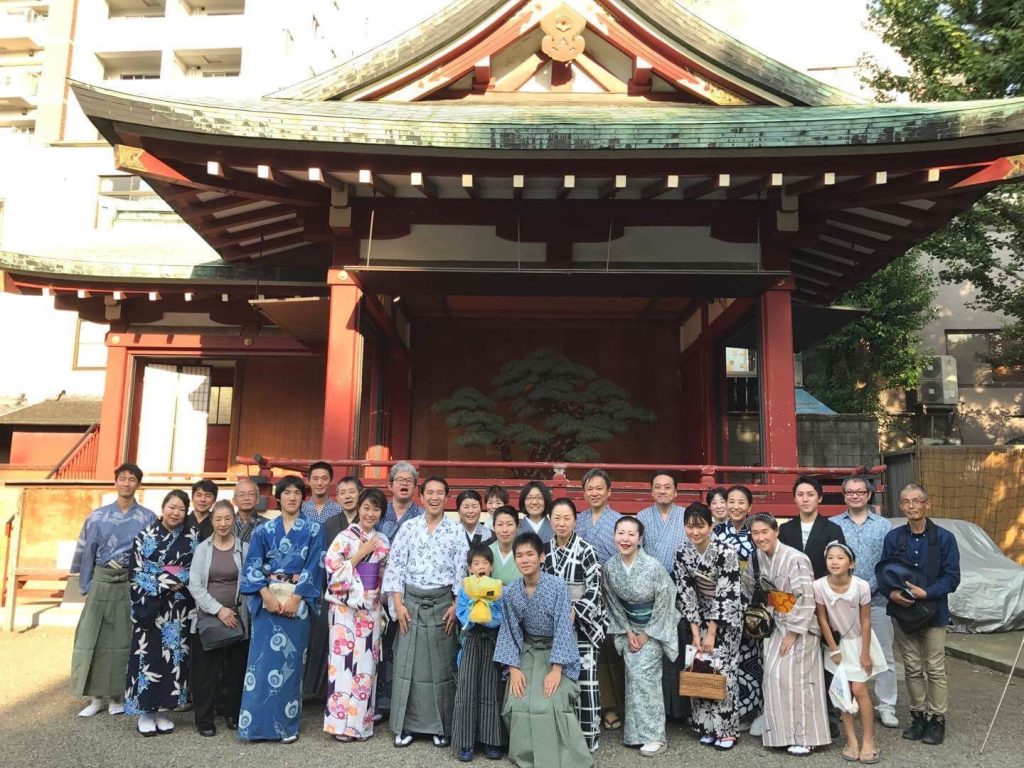
Since 2017, the Kyogen recital “Paris Wakana-no-kai” has been held in Paris, France. 第1回 第2回 第3回
Shugendo & Ko-Shinto “Ennen-ko”
About “Ennen-ko”
Guided by the principle of “Keishin Suso” (Reverence for the Gods and Respect for Ancestors), I have been dedicated to practicing the daily rituals and ascetic training of Japan’s ancient Shinto (Ko-Shinto) and Shugendo. Since 2010, I have studied under Master Hiroaki Omote and actively participated as a member of the “Shinko-ko” group.
Recently, I was deeply honored to receive the full initiation of Shodai Sendatsu (Grand Master). Taking this momentous occasion to heart, I established “Ennen-ko” with the mission of nurturing a deeper faith, studying Japanese culture and spirituality, and tempering both mind and body through rigorous training. Our ultimate goal is to cultivate rich humanity and develop exceptional individuals who can truly contribute to society and the world.
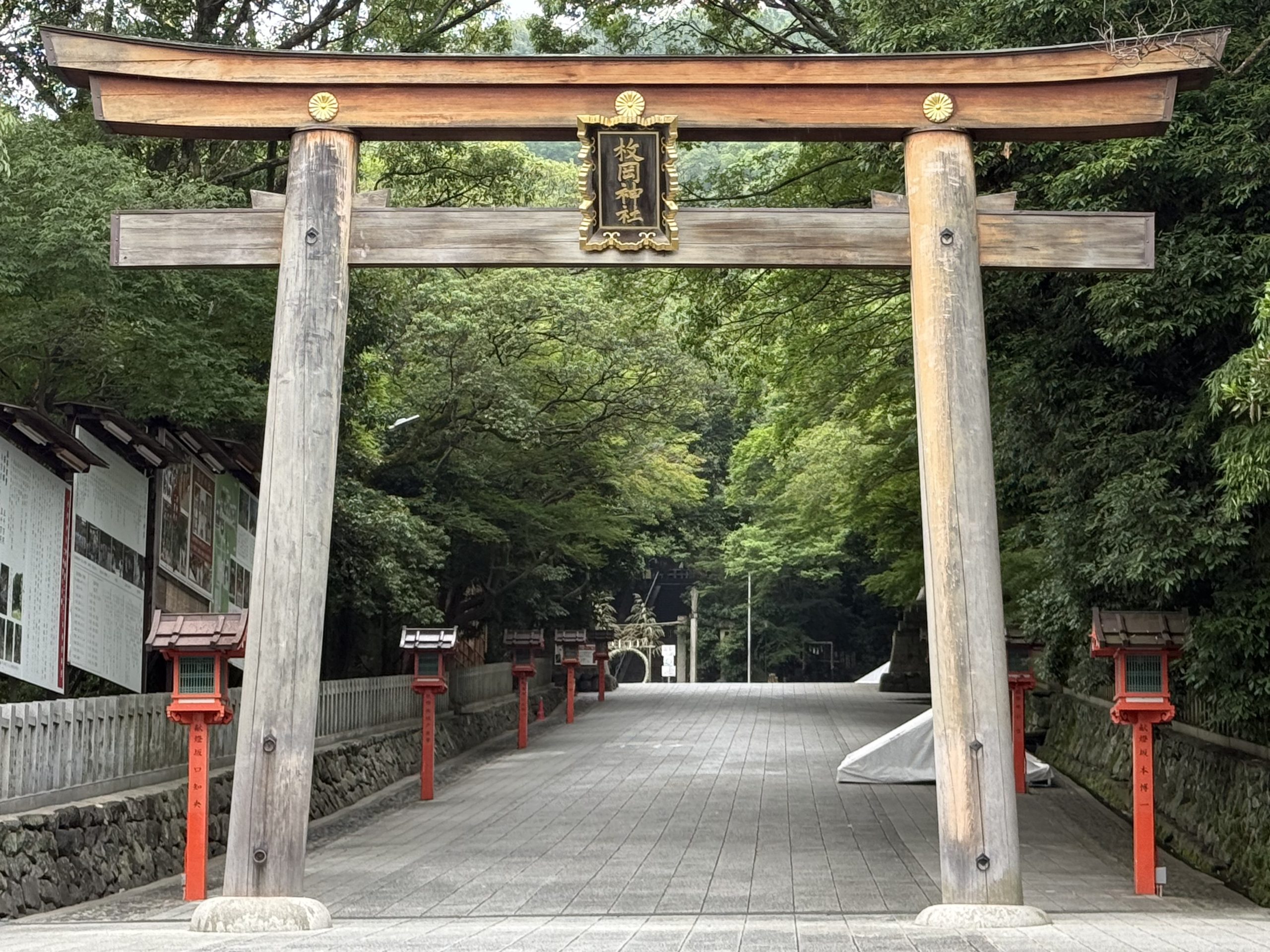
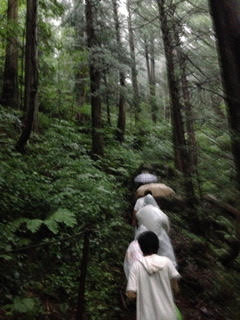
Our primary activities include monthly gatherings at Hiraoka Shrine and Amoru-no-Miya, where we conduct annual rituals—such as the New Year’s Festival, Setsubun, Equinox ceremonies, and the Great Purification (Nagoshi-no-Harae). We also pass down lectures on the sacred “Misogi” (purification) rituals, Norito (Shinto prayers), Buddhist scriptures, and secret mudras (Hi-in). Furthermore, every May, we devote ourselves to the sacred pilgrimage of scaling Mount Omine.
This training awakens the power of the soul from within the physical body, allowing us to physically embody the true laws of nature. By enhancing our spiritual capacity to achieve Shinjin Ittai (the oneness of divine and human) and polishing our spiritual strength, we foster the power to walk our destined path—transforming “great disasters into small misfortunes, and small misfortunes into none.” I sincerely pray for the support and alignment of all those who aspire to undertake this training.
It is often said that people rarely take action until they are in dire need. “Ennen-ko” prioritizes active practice, offering our hearts and minds to the deities through hands-on participation in each ritual. This is the true practice of Shinjin Ittai learned from ancient lore.
Where there is practical prayer, there is happiness. Recognizing that the peace of our nation, our homes, and our loved ones is intertwined with our own happiness, I hope to inspire as many people as possible to join us in this path of active practice.
Let us offer our prayers of gratitude to the great nature that protects and sustains our lives and all living things. The manifestation of peace begins with a single prayer!

※Master Hiroaki Omote (Kazufusa Yamakage)
The 80th Grand Master of Yamakage Shinto and the Founder of Sosei Kagura. He serves as the Representative Director of the Association for the Promotion of Modernization of Japanese Cultural Traditional Industries and as a Regional Producer for the Association for the Promotion of Traditional Craft Industries. Born in Osaka in 1962, he has launched international projects, including Kagura performances and art exhibitions, under the theme of “Neo-Japanesque (Innovating via Ancient Wisdom)” to showcase his unique Japanese worldview.
Since 1996, he has continually organized international exchange initiatives across various nations, including Italy, France, Germany, the UK, South Korea, Singapore, Vietnam, the USA, and Hungary, spanning over 30 years. In 2005, he was a founding member of the “Neo-Japanesque Brand Promotion Council,” established within the Ministry of Economy, Trade and Industry (METI). In 2010, he was appointed by the Japan Tourism Agency as the very first “Entertainment Tourism Meister.”
Currently, he continues to dedicate “Sosei Kagura” ritual performances at sacred sites both in Japan and abroad. In 2026, his innovative Kimono artwork integrating traditional Japanese craftsmanship received the “Outstanding Kimono Design Innovator” award at the OSKAR Luxury Gala in Hollywood, USA.
※Shinko-ko
Located near Hiraoka Shrine, the First Shrine (Ichinomiya) of Kawachi Province, “Shinko-ko” is a gathering of spiritual practitioners centered around the personal residence and primary dojo of Master Hiroaki Omote (hereafter referred to as Master Shogetsu).
From his teenage years, driven by a vision to realize a peaceful and harmonious global utopia, Master Shogetsu embarked on the path of Ko-Shinto and Shugendo under the guidance of his father, Noriyoshi Omote. He eventually established his training under the tutelage of Master Chihiro Kawarada, leading to the founding of Shinko-ko.
Following rigorous ascetic training deep within Mount Ikoma, he had the privilege of receiving the profound guidance of Tadachika Nakayama—a venerable elder from the maternal line of Emperor Meiji who oversaw imperial rituals. This sacred connection led to the divine invocation of Amemoto Nagareru Uzumitakaratsurugi no Ookami, the Taigenrei (Great Primal Spirit) responsible for the spiritual protection of the nation. This deity was subsequently enshrined at the primary dojo of Shinko-ko.
In today’s world of deepening global turmoil, the path of Kannagara (the way of the gods as it naturally unfolds) passed down through Japan is precisely what can bring harmony to all people and all creation, serving as a guiding beacon not only for Japan but for the entire world. Shinko-ko bears the noble mission and responsibility to actively practice and manifest this ideal world.
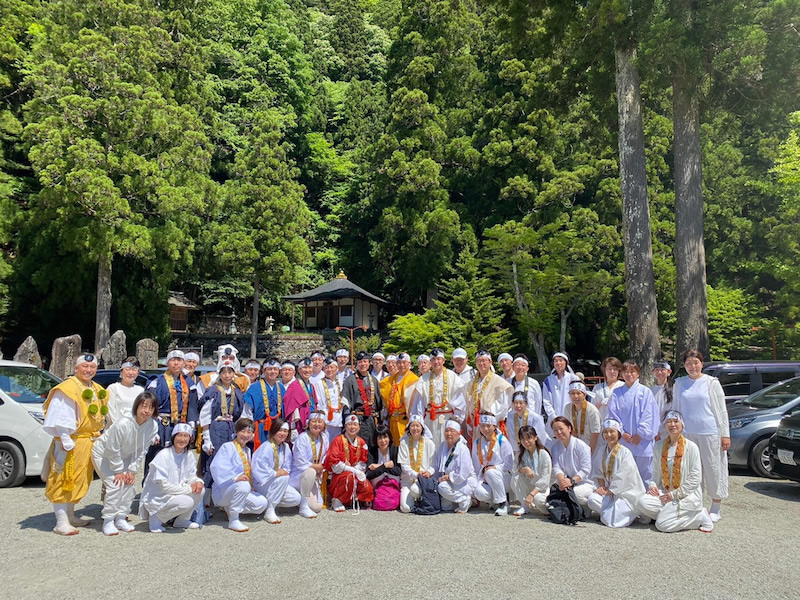
※Hiraoka Shrine
Hiraoka Shrine, located in Izumoi-cho, Higashiosaka City, Osaka Prefecture, is a deeply venerable and historic Shinto shrine. Documented as a Shikinaisha (specifically a Myojin Taisha, a shrine of high spiritual renown), it has been revered since ancient times as the Ichinomiya (First Shrine) of Kawachi Province. Under the modern shrine ranking system, it held the prestigious rank of Kanpei Taisha (Grand Imperial Shrine) and is currently designated as a Beppyo Jinja (Special Shrine) by the Association of Shinto Shrines. Enshrined at the western foot of the Ikoma Mountains, it sits before the sacred Mount Kamizudake. Hiraoka Shrine is an ancient sanctuary primarily dedicated to Ameno-koyane-no-mikoto, the ancestral deity of the Nakatomi clan, holding an immensely significant place in both Japanese history and culture.
Founding and Legend According to legendary tradition, the founding of Hiraoka Shrine dates back to three years before the enthronement of Emperor Jimmu, when Amentane-no-mikoto enshrined Ameno-koyane-no-mikoto and Himegami on Mount Kamizudake. Later, in the first year of Hakuchi (650 AD), the shrine was relocated to its current sanctuary at the foot of the mountain. This sacred tradition serves as a vital historical record demonstrating the profound relationship between ancient clans and Shinto shrines.
Historical Background and the Connection to “Moto-Kasuga”: The Origins as the Nakatomi Clan’s Tutelary Deity The origins of Hiraoka Shrine are traced back to ancient mountain worship on Mount Kamizudake. Ameno-koyane-no-mikoto is the ancestral deity of the Nakatomi, an ancient influential clan, and has been revered as their guardian spirit. Later, when the Fujiwara clan (descended from the Nakatomi clan) founded the famous Kasuga Taisha Shrine in Nara, the divine spirits of Ameno-koyane-no-mikoto and Himegami were divided and transferred there from Hiraoka Shrine. Because of this historical lineage, Hiraoka Shrine is honorably referred to as “Moto-Kasuga” (the Origin of Kasuga).
Prosperity from the Heian Period Onward Along with the rise of the Fujiwara clan, reverence for Hiraoka Shrine deepened exponentially. During the Heian period, its divine rank reached the supreme position of Shoichii Kunsahto (Senior First Rank, Third Class of Merit), making it renowned nationwide. Furthermore, from the medieval period onward, it firmly established its status as the Ichinomiya (First Shrine) of Kawachi Province, and following the Meiji Restoration, it was officially elevated to a Kanpei Taisha.
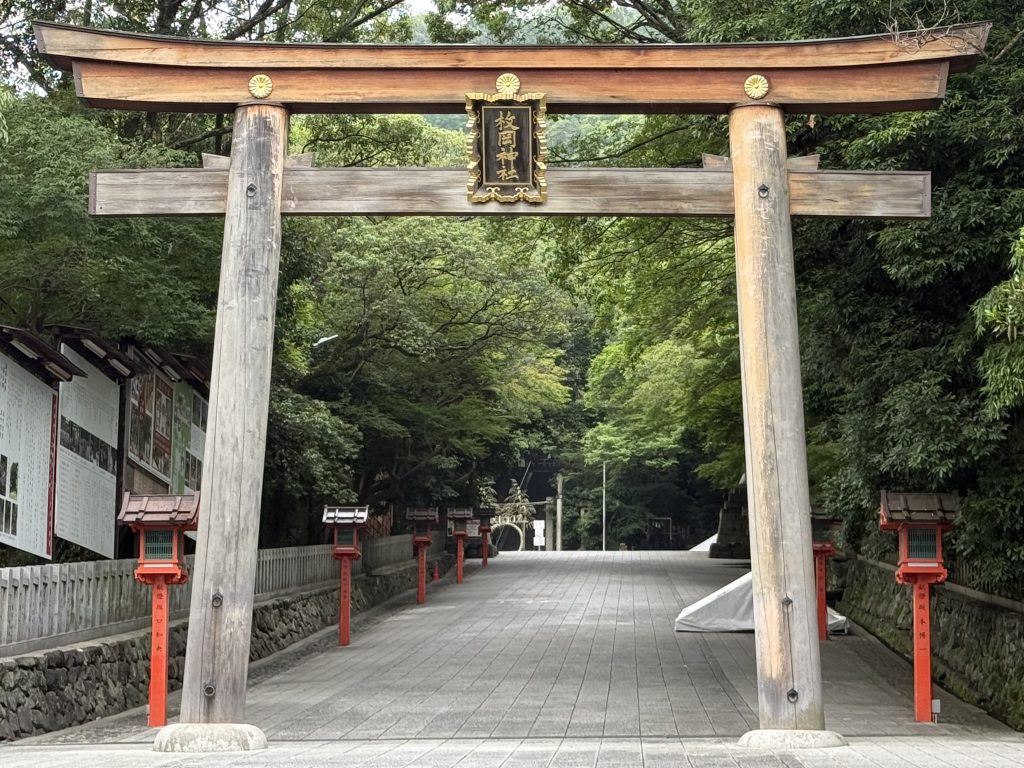
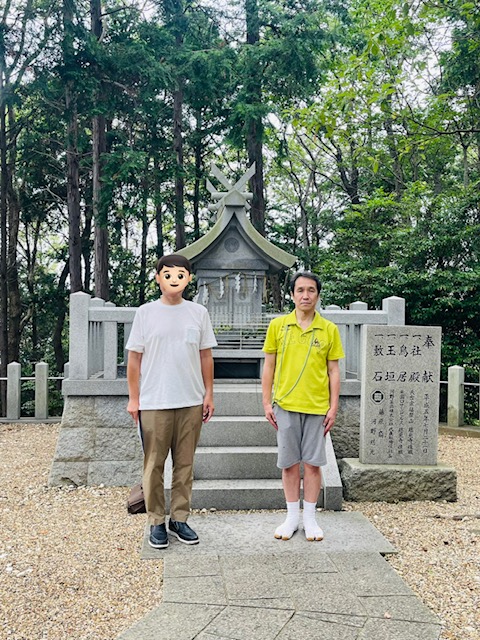
※Amoru-no-Miya
◇ The Lineage and History of Amoru-no-Miya ◇
The primary deity enshrined at Amoru-no-Miya, Amemoto Nagareru Uzumitakaratsurugi no Ookami, is the Taigenrei (Great Primal Spirit) responsible for the spiritual protection of the nation. The physical manifestation of this divine entity is a sacred treasure sword that inherits the combined spiritual lineage of the Amenonuboko (the Heavenly Jeweled Spear) used by Izanagi-no-Mikoto during the creation of Japan, as well as the two sacred swords, Amakuni and Amakura, which were later bestowed upon the heavenly descendants.
In accordance with sacred rituals conducted within the spiritual grounds of Mount Ikoma—a holy mountain in Kawachi Province—a sacred boundary (Kekkai) was established by wrapping white cloth in three layers. At the hour of Tora-no-koku (the Hour of the Tiger, around 3:00 AM), Master Shogetsu prostrated himself at the center of the sanctuary, praying for the protection of the nation and the peace of all mankind. Utilizing a sacred relic passed down through a prominent lineage related to the maternal side of Emperor Meiji as a Yorishiro (divine vehicle), he unsheathed a short sword—forged from the iron sand of the Hinokawa River—directing its tip toward the heavens as he waited.
In response, the Taigenrei manifested, causing the heavens, the earth, the mountains, and all vegetation to vibrate in deep resonance (Meido), imparting a profound weight upon the blade as the deity descended.
Since that miraculous moment, the deity has been enshrined and honored with sacred offerings at Amoru-no-Miya, built at the foot of the former Hachiman Shrine in Gojo-cho, situated within the original, ancient precincts of Hiraoka Shrine (the First Shrine of Kawachi Province and a land of national pacification). From this sanctuary, the divine light continues to shine, delivering the nation from crises and serving as a guiding beacon of faith for the people. Furthermore, Amoru-no-Miya is widely revered as a sacred dojo for actively practicing Misogi-gyo (purification rituals) rooted in the ancient myths of Izanagi-no-Ookami.
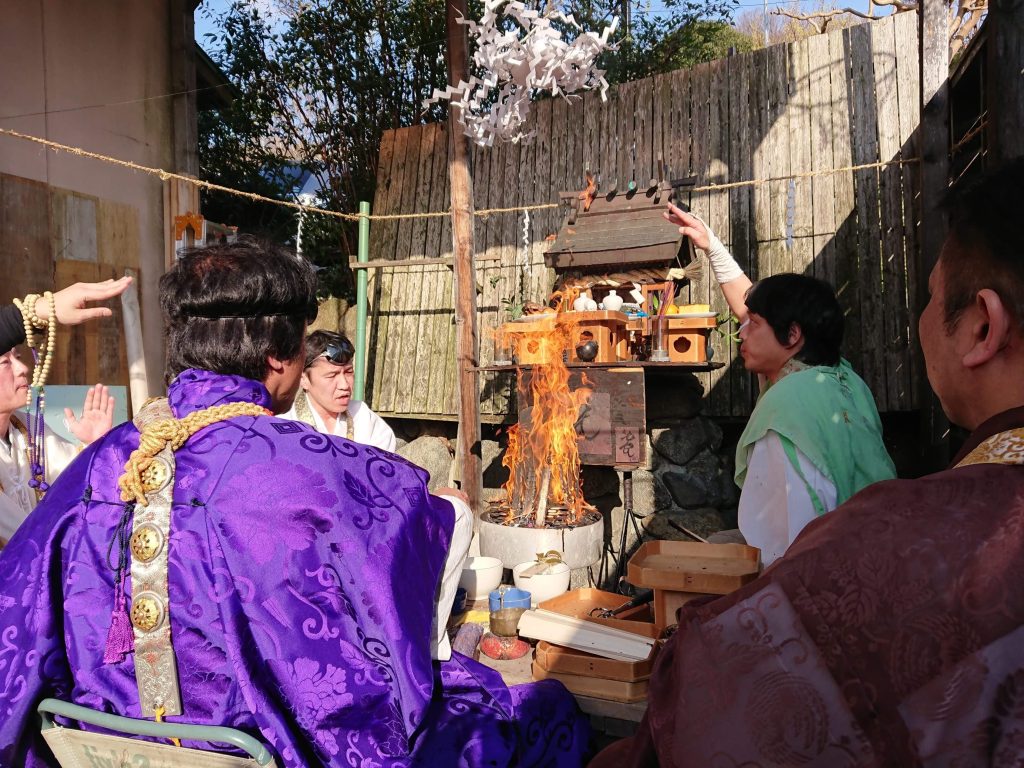
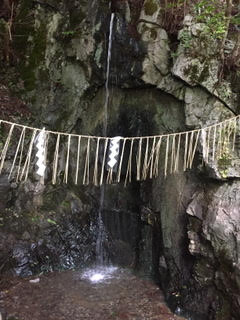
※What is Misogi-Harae? (The Ritual of Purification)
This sacred ritual is rooted in the ancient myth of Izanagi-no-Kami upon his return from Yomi-no-Kuni (the Underworld). Pursued by the Yomotsu-Shikome (Hags of the Underworld), he narrowly escaped to Yomotsu-Hirasaka (the slope that borders the realm of the dead and the living). There, he plucked peaches from a nearby tree and hurled them at his pursuers, successfully repelling the malevolent spirits.
Having finally returned to the living world, he performed the ritual of Misogi (purification) at Awagigahara. As he washed his left eye, Amaterasu-Omikami (the Sun Goddess) was born; as he washed his right eye, Tsukiyomi-no-Kami (the Moon God) was born; and as he washed his nose, Takehayasusa-no-Wo-no-Kami (the Storm God) came into being. This monumental divine event marks the very origin of Japan.
The true essence of this practice lies in the principle of the cosmic cycle balancing life and death, and the revitalization of vital life force. The forms and rituals passed down to us as gifts from Japan’s deities and ancestors continue to bestow upon us the power to harmonize both mind and body, enabling us to fulfill our higher missions.
Through Misogi, we actively practice the path of truly living and letting live as human beings. Feeling the divine wind (Kamikaze) rush through one’s body to achieve Shinjin Ittai (the oneness of divine and human) is the very definition of Japanese identity and form. For the spiritual revival of all mankind, we invite the world to experience this profound practice firsthand.


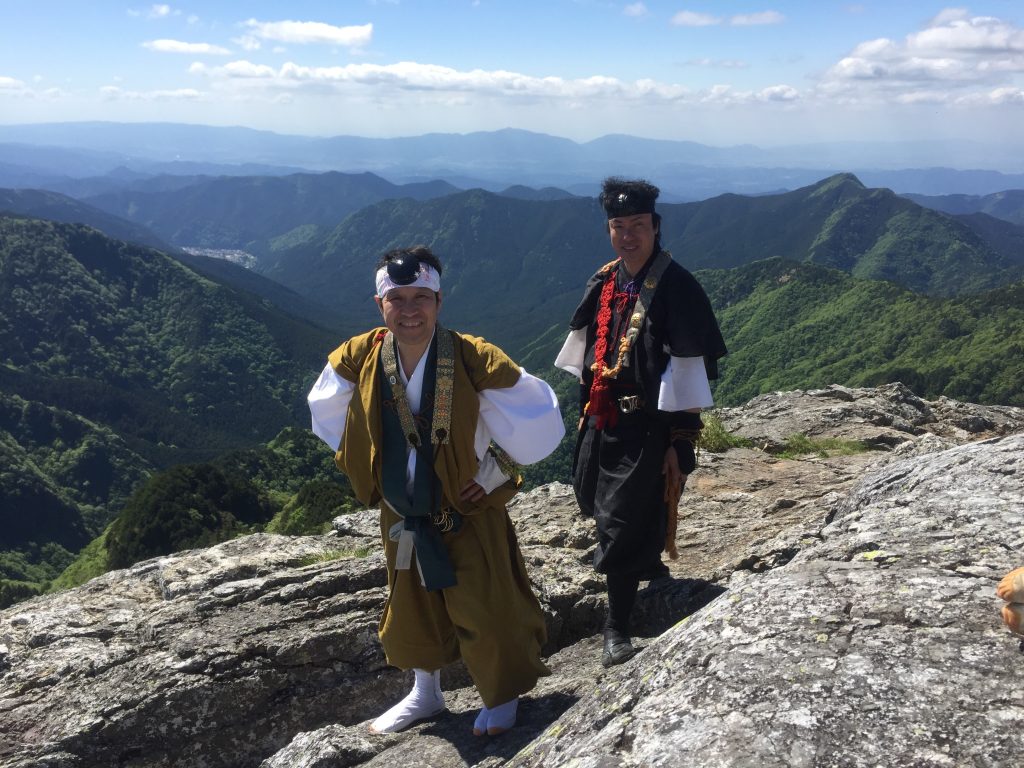
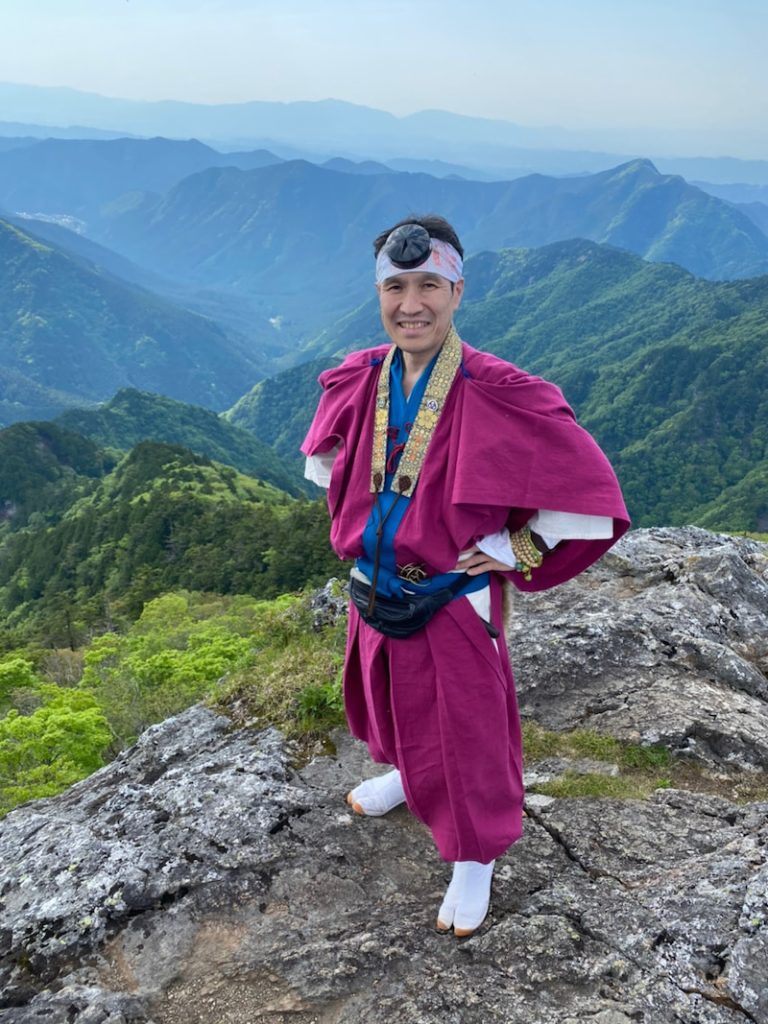
※Mount Omine Pilgrimage (Ominesan Tohai)
Mount Omine, the sacred peak connecting Yoshino and Tenkawa-Dorogawa, is a holy mountain opened over 1,300 years ago by En-no-Gyoja (Jinpen Daibosatsu)—a prince of the Katsuragi clan and the founder of Shugendo—as the primary dojo for mountain asceticism. Since ancient times, it has been preserved as a sacred training ground for men. At the milestone of Genpuku (the traditional coming-of-age ceremony for 15-year-old males), it has long been a custom for Japanese youth to undertake the Mount Omine pilgrimage. During this journey, they undergo a life-or-death ordeal known as Nishi-no-Nozoki, where they are suspended by a lifeline over a sheer cliff. Through this experience, they are symbolically reborn, swearing a sacred oath to dedicate their lives to the service of society, others, and the nation.
For women who aspire to undertake this spiritual path, there is the pilgrimage to Mount Inamuragatake, which aims toward the adjacent Mount Dainichidake. Established as a sacred training ground for women, practitioners ascend this holy mountain dedicated to Dainichi Nyorai (the primordial deity of Shingon Esoteric Buddhism) to receive the solar power of Dainichi. This training is designed to awaken and cultivate the grand maternal spirit that nurtures and sustains life.
Broadly speaking, Shugendo signifies “the path of training and testing.” By personally walking the path of ascetic practice and accumulating countless profound experiences, one awakens the inherent inner wisdom and unlocks their Tenmei (heavenly mission—the ultimate purpose of one’s birth).
These separate training grounds for men and women are not divided out of discrimination, but are defined by the distinction of their respective intrinsic characteristics. In recent years, the boundaries between the roles and occupations of men and women have been fading; however, the fundamental essence of life differs based on these natural traits. Men cannot carry life and possess a nature akin to a child, whereas women possess a sacred womb (Miya) to carry life and possess the nature of a mother. This is an immutable law of nature, no matter how the world changes.
To ensure that each individual can practice in accordance with their unique traits and capacities, En-no-Gyoja, the founder of Shugendo, revealed these specific training grounds to future practitioners. Generations of venerable leaders (Sendatsu) have inherited these customary methods, passing them down to successors to this very day. In an era where the decay of the mind and humanity is visibly lamented, it is precisely for each human being to polish their true essence and live with established character. This is the most immediate way to reform society and actively rebuild our nation.
We practice visits to Hiraoka Shrine, receive instruction in the rituals of Norito (Shinto prayers) and Buddhist scriptures, and perform Misogi (purification). Every May, we purify our minds and bodies (Shojin Kessai) to undertake a sacred pilgrimage to the holy Mount Omine.
Held only in Osaka: The 1st of every month, 9:00 AM – 11:30 AM
Duration & Tuition: 150 mins / Once a month (3 sessions over 3 months) 5,000 yen per session / Total: 15,000 yen
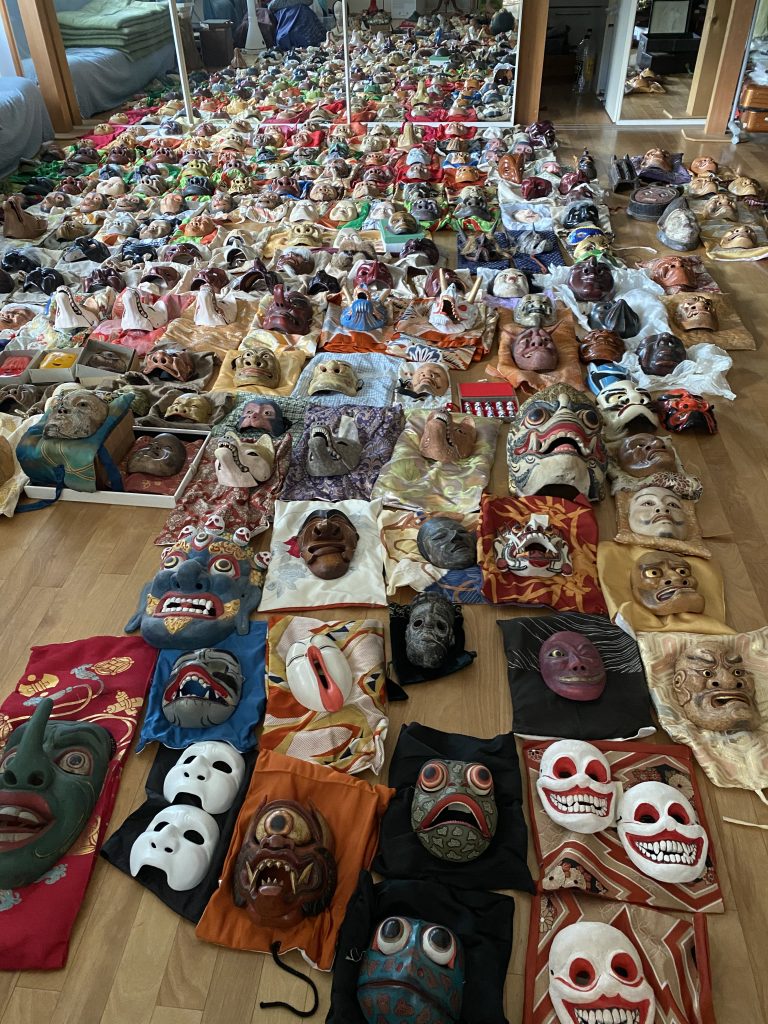
The Mask “Masqizm“
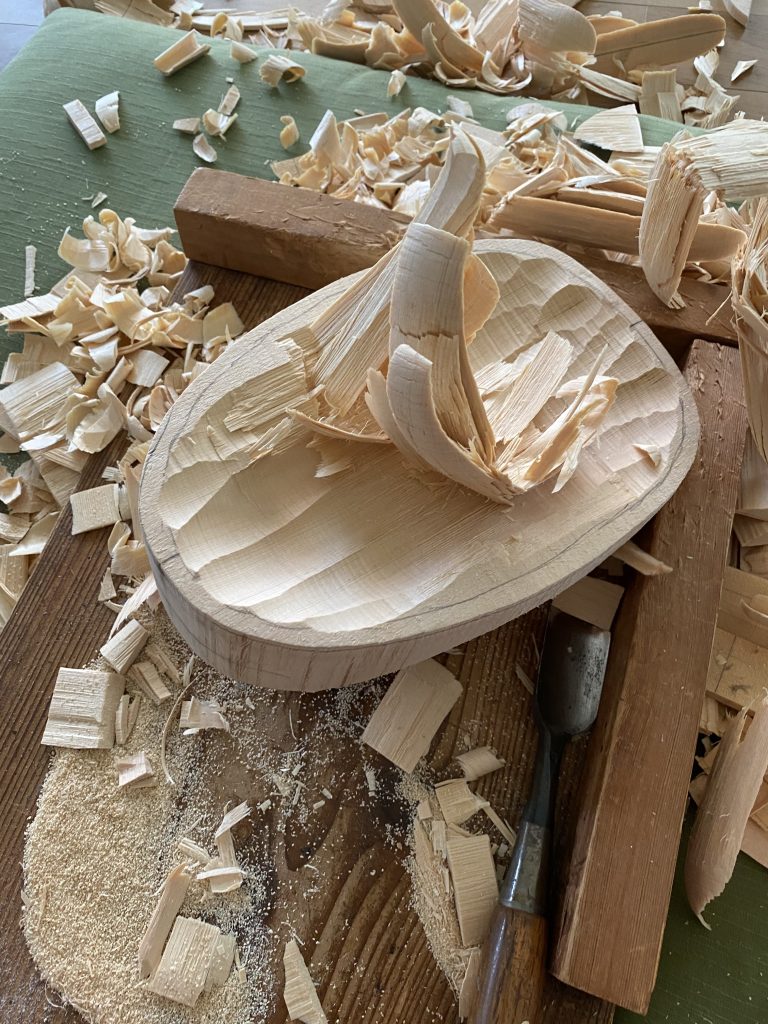
Mask Making:Craft
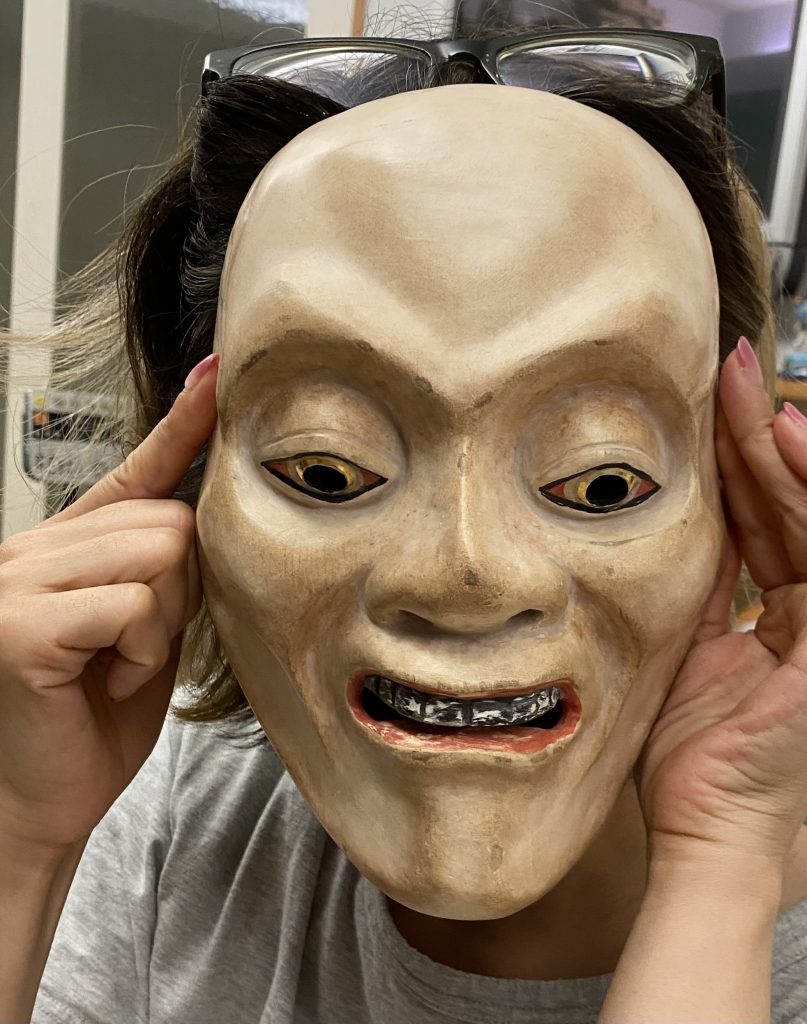
● Mask Making (Craft): > Rooted in the aesthetics of Noh masks, this course provides instruction in the traditional craftsmanship of sculpting masks as a “second skin” that synchronizes with the wearer’s unique skeletal structure and breathing. Through the act of creation, participants confront their inner selves as they sculpt (or select) their own mask—a true “process of introspection.”
Duration & Tuition: 180 mins / Twice a month 5,000 yen per session (Material fees separate) ※ Available upon request only
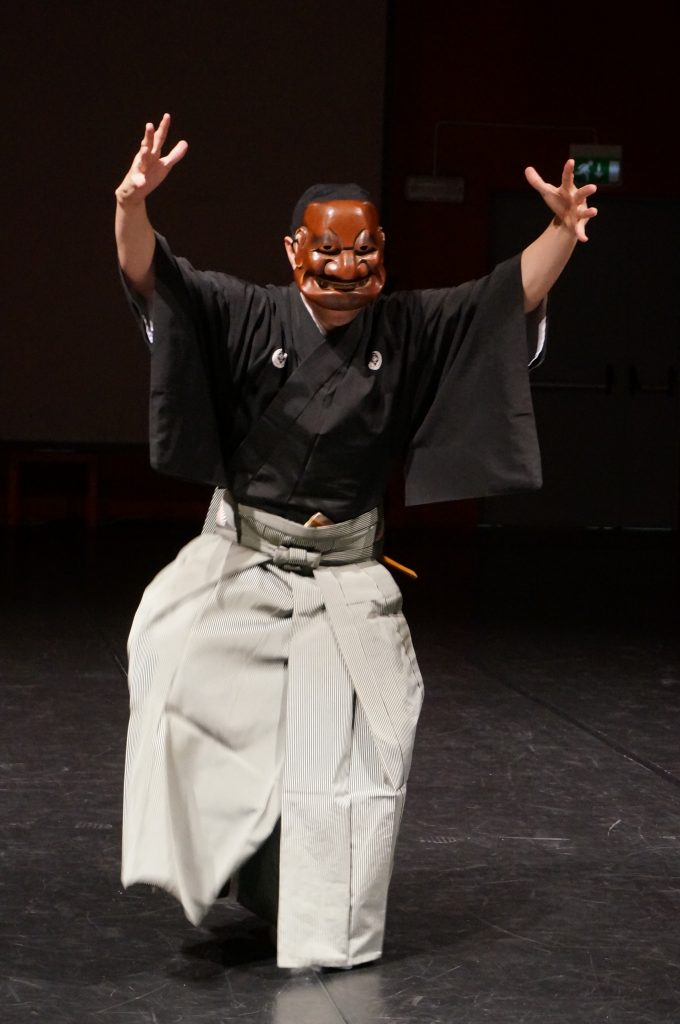
Noh Mask and Somatic Style:Perform
● Performer (Perform): By donning a mask, one effaces the self to become a vessel for another entity. Participants will study the advanced somatic techniques and traditional styles of Noh theater—a legacy preserved for over 650 years—as well as the stock character typologies of traditional Italian masked theater.
Tokyo: July 6, 14 / August 6, 30 / September 17, 29
13:00 – 15:00 (Exception—August 6 only: 9:00 – 11:00)
Osaka: July 8, 16 / August 26, 31 / September 24, 30
13:00 – 15:00
Duration & Tuition: 120 mins / Twice a month (6 sessions over 3 months)
5,000 yen per session / Total: 30,000 yen
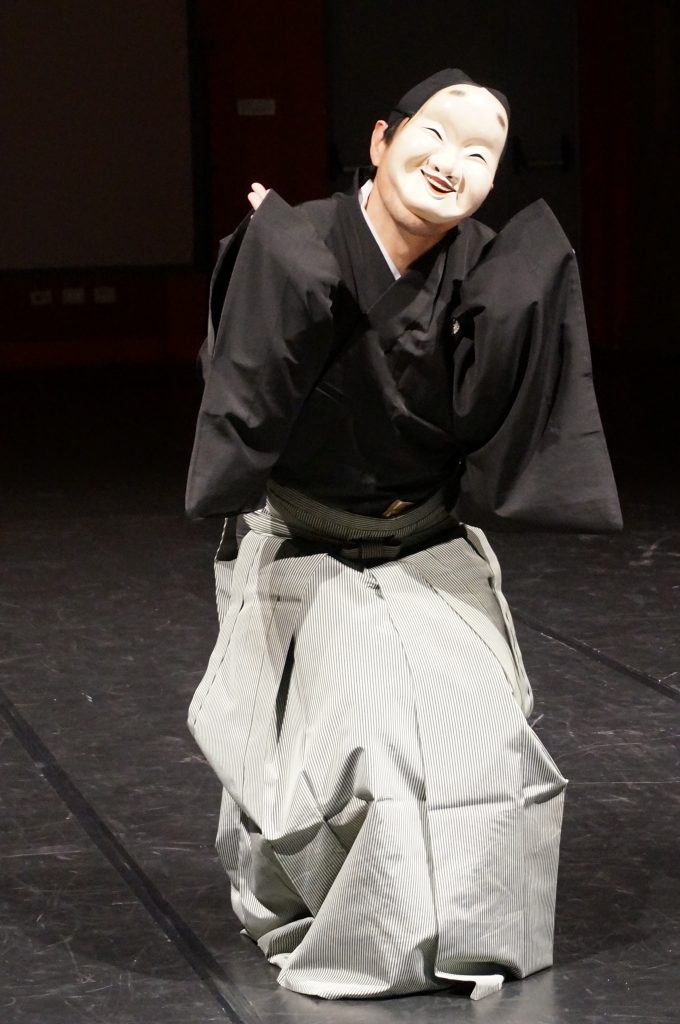
Commedia dell’arte:Improvisation
● Actor (Act): A transformative process of shedding one’s fixed identity to act through a completely new persona. Participants will learn the stock characters of traditional Italian masked theater and engage in masked improvisation.
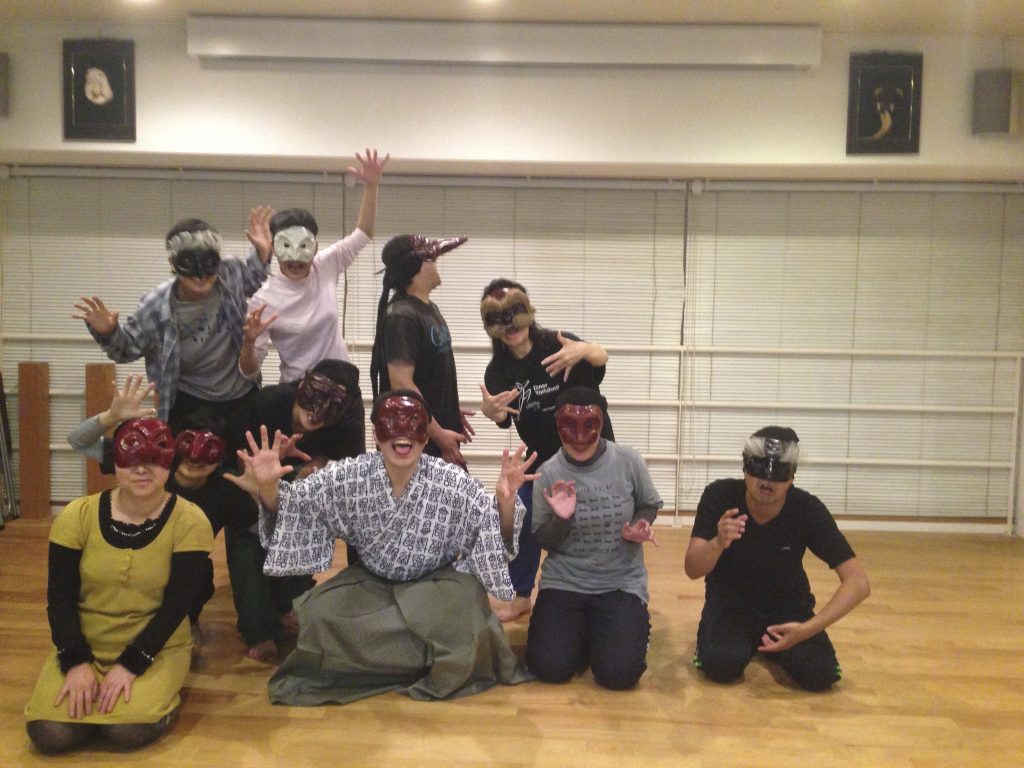
● The Proteus Effect: > It has been proven that individuals unconsciously optimize their behavior and thoughts to align with the characteristics of the avatar (or mask) they are wearing. Let us discover your true self by donning a mask!
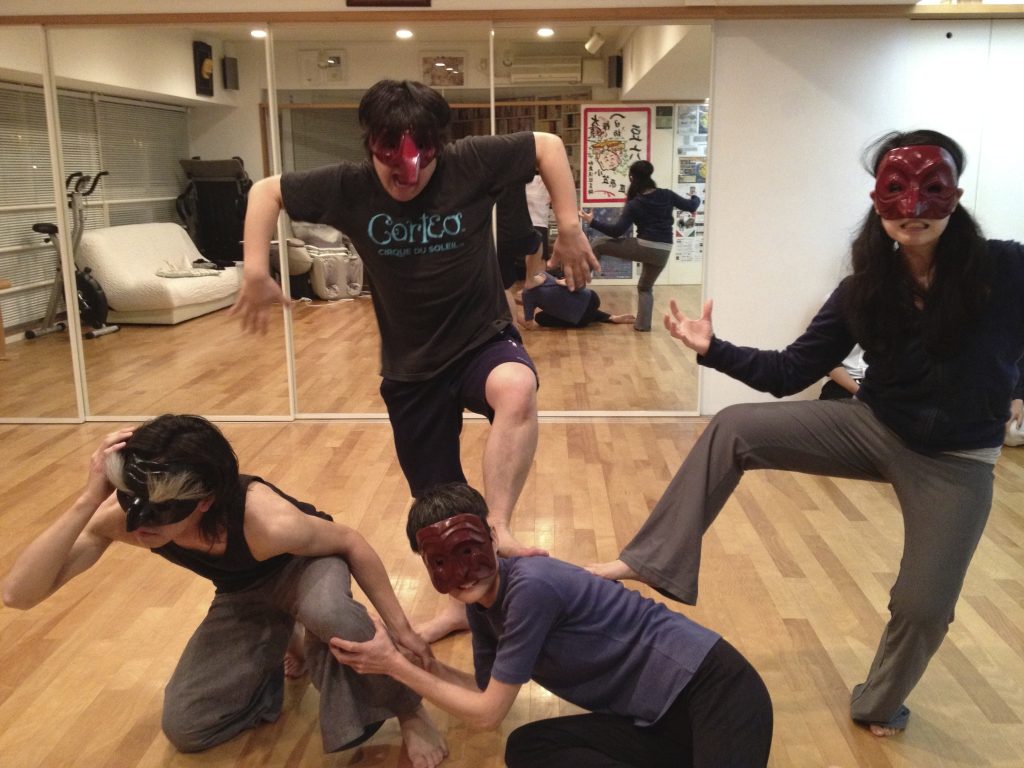
Tokyo: July 6, 14 / August 6, 30 / September 17, 29
15:30 – 17:30 (Exception—August 6 only: 11:30 – 13:30)
Osaka: July 8, 16 / August 26, 31 / September 24, 30
13:00 – 15:00
Duration & Tuition: 120 mins / Twice a month (6 sessions over 3 months)
5,000 yen per session / Total: 30,000 yen
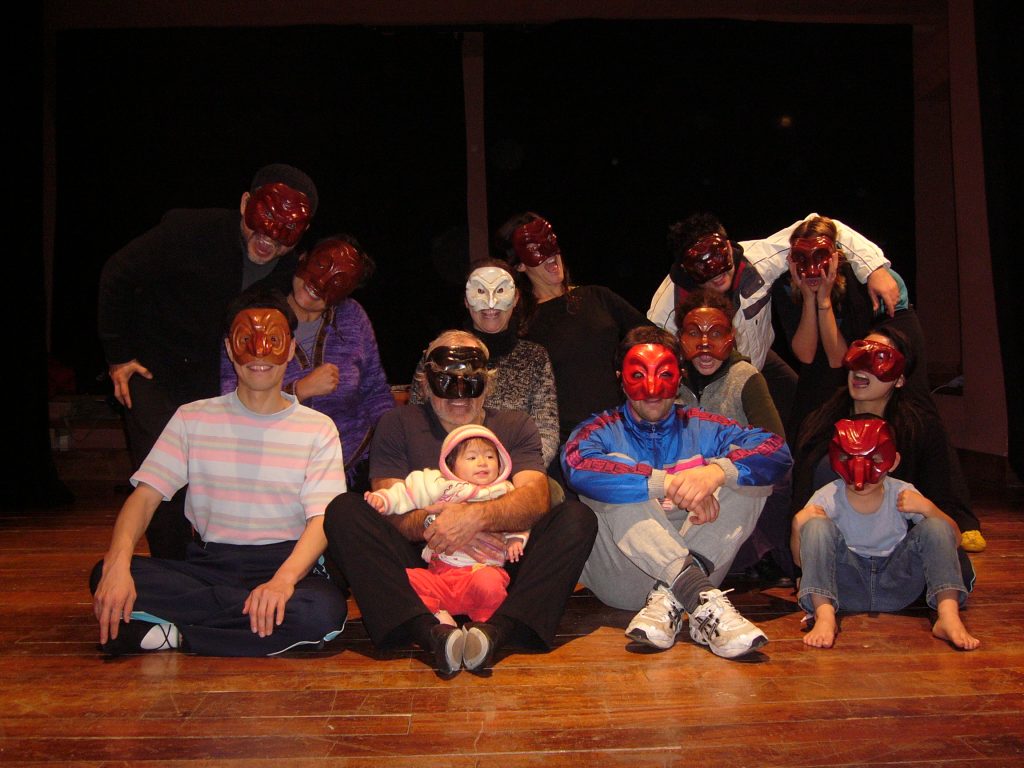
Unlocking Human Potential and a Paradigm Shift in Organizational Transformation:Direct
Drawing on the practices of Shugendo and Ko-Shinto, this program pursues the spirituality at the very roots of traditional performing arts, while programming the use of masks based on scientific and psychological evidence.
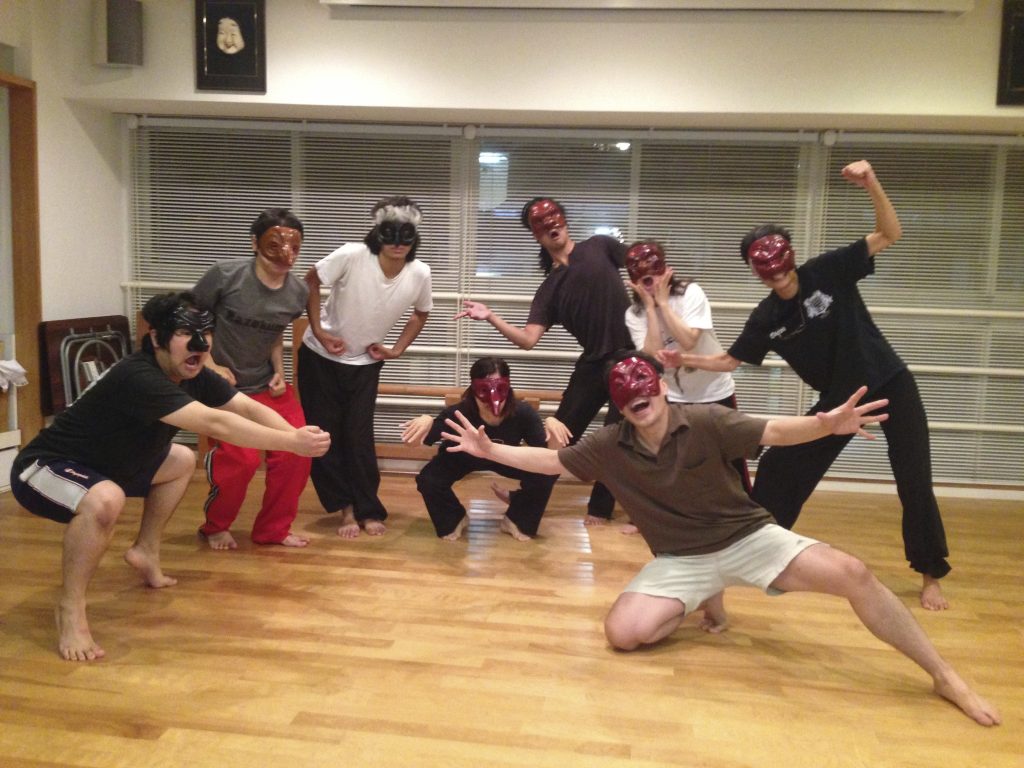
● Cognitive Disinhibition (Depersonalization): By ensuring anonymity, this process eliminates the fear of social evaluation, activates the creative regions of the brain, and helps resolve trauma!
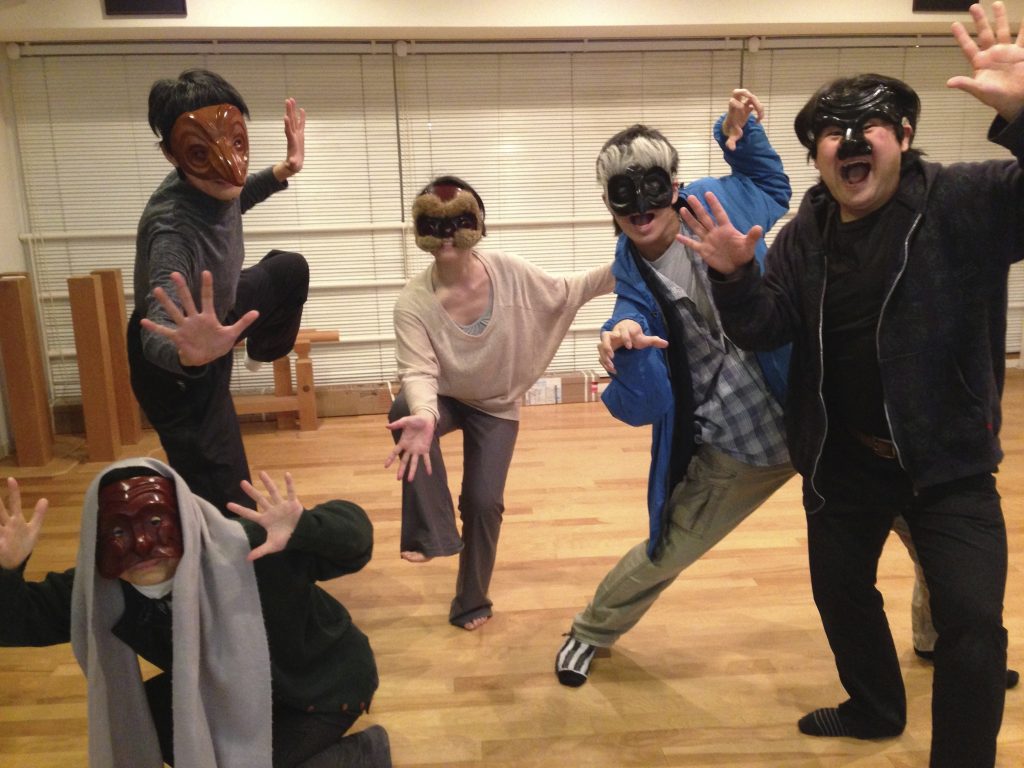
● Neuro-Linguistic Programming (NLP): An exercise designed to ground the extraordinary insights gained from the mask experience into everyday behavioral transformation, utilizing language pattern reframing and anchoring techniques. By leveraging the LAB Profile (Language and Behavior Profile) to analyze participants’ thinking patterns, this process delivers optimal facilitation tailored to each individual.
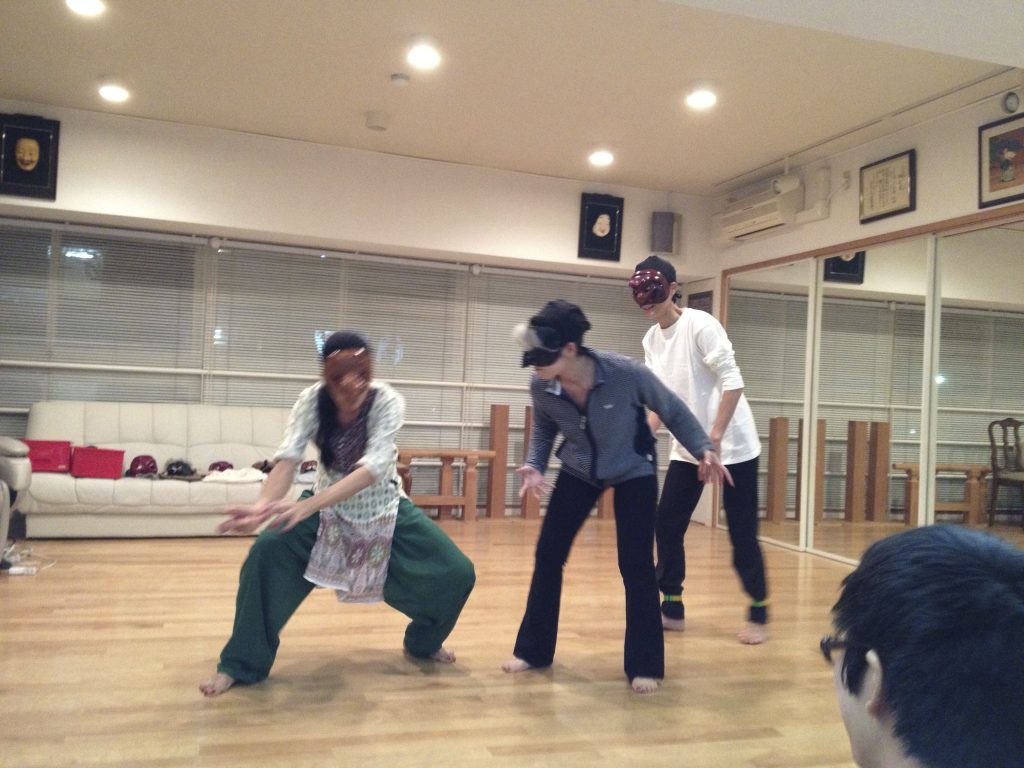
● Generative Trance (Creative Trance): Utilizing methods rooted in the lineage of Milton Erickson, this approach safely and creatively harnesses the altered state of consciousness induced by wearing a mask, facilitating deep-level self-transformation.
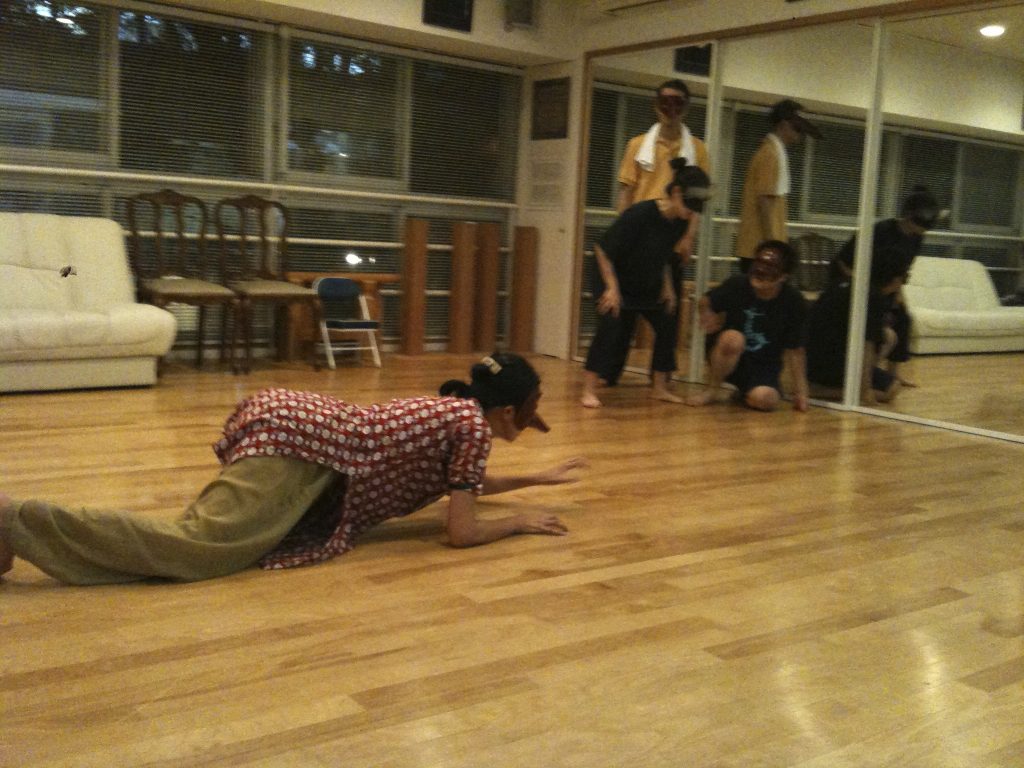
Tokyo: July 6, 14 / August 6, 30 / September 17, 29
19:00 – 21:00 (Exception—August 6 only: 14:00 – 16:00)
Osaka: July 8, 16 / August 26, 31 / September 24, 30
13:00 – 15:00
Duration & Tuition: 120 mins / Twice a month (6 sessions over 3 months)
5,000 yen per session / Total: 30,000 yen
History of Japanese Performing Arts
Japanese performing arts originated from ancient Shinto rituals dedicated to the deities, evolving over time into highly stylized forms. The earliest performers in Japan were called “Wazaogi”—where “Waza” signifies the power of the gods, and “Ogu” means to invoke or summon that divine presence.
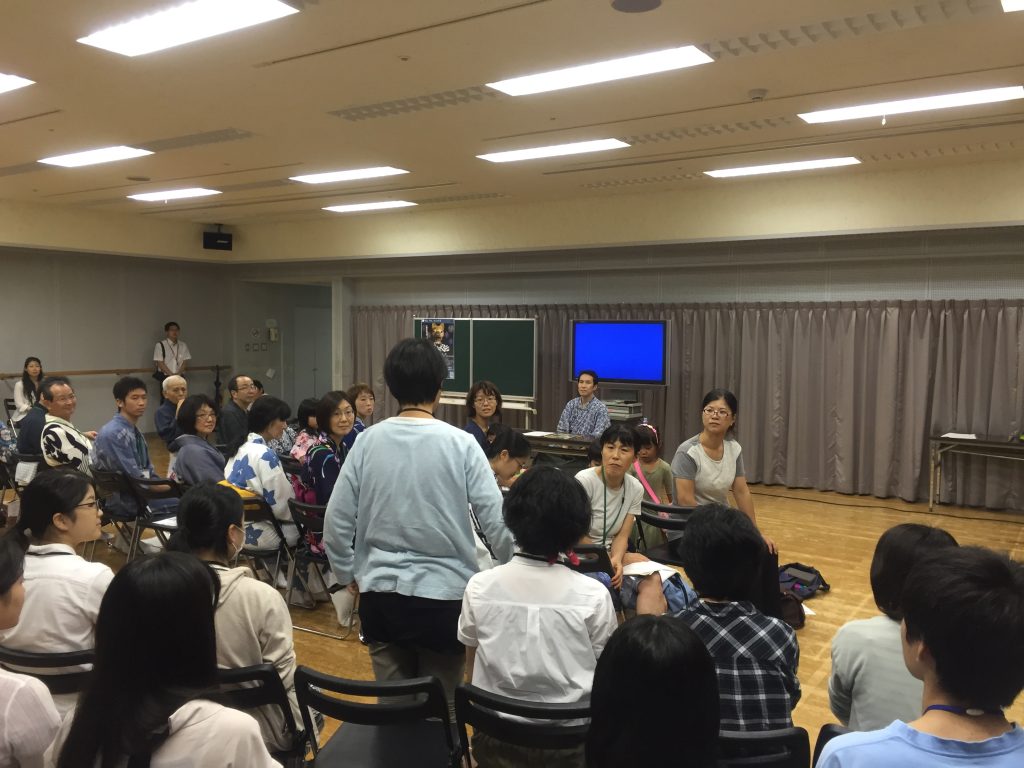
In this course, an active successor of traditional performing arts will guide you through a fascinating chronological journey from ancient sacred rituals to modern entertainment. The lectures offer an enjoyable yet deep exploration of theatrical forms through historical, religious, and philosophical lenses.
Tokyo: July 6, 14 / August 5, 30 / September 17, 29
10:30 – 12:00
Duration & Tuition: 90 mins / Twice a month (6 sessions over 3 months)
5,000 yen per session / Total: 30,000 yen
Age-Defying Longevity Course: “History of Japanese Performing Arts”